
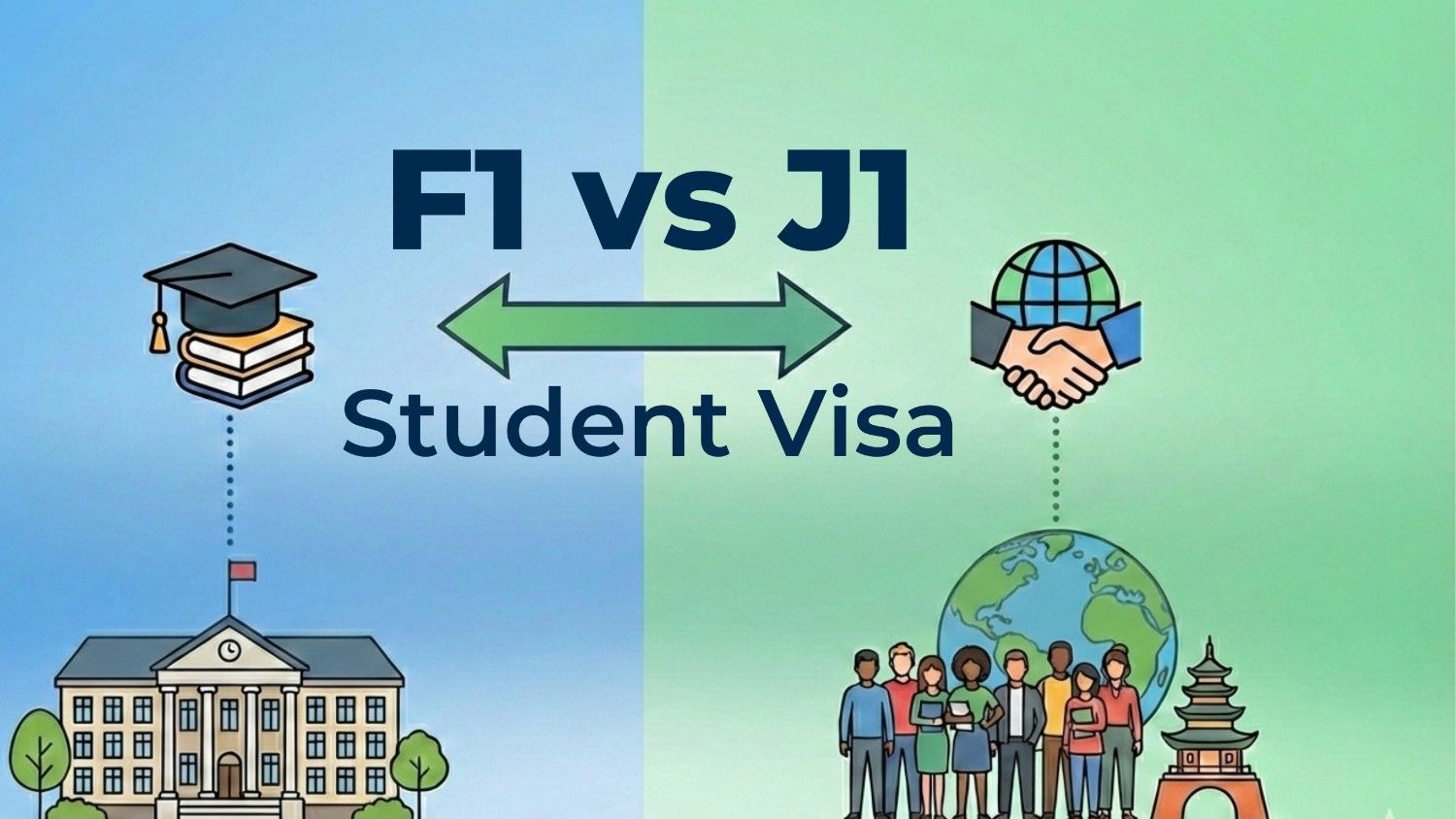
Studying in the United States is a dream for many international students, and selecting the right visa is a crucial first step. The two most common study-related visas are the USA F1 Student Visa and the USA J1 Student Visa. Although both visas allow students to study in the U.S., they differ significantly in purpose, eligibility, funding, work options, and post-study opportunities.
This blog explains the difference between the USA F1 student visa and J1 student visa in a simple and clear way to help you make the right decision.
The F1 student visa is the most popular visa for international students pursuing full-time academic studies in the United States. It is designed for students enrolled in universities, colleges, high schools, private schools, or language training programs approved by Student.
Key Features of F1 Visa
Full-time academic study
Issued based on Form I-20
Self-funded or sponsor-funded
On-campus work allowed (part-time)
Strong post-study work options (OPT)
The J1 student visa is part of the Exchange Visitor Program and is mainly meant for cultural exchange and learning. It is commonly used for students, scholars, interns, researchers, and exchange participants funded by governments, universities, or international organizations.
Key Features of J1 Visa
Cultural exchange and learning
Funding is usually provided by a sponsor
Allows more flexibility in work options (with approval)
Some students may need to return to their home country for two years after the program
1. Purpose of the Visa
F1 Visa: Academic education with long-term career goals.
J1 Visa: Cultural exchange and short-term educational programs.
2. Funding Requirements
F1 Visa: Students can use personal funds, family support, or loans.
J1 Visa: Funding usually comes from the U.S. government, home country government, university.
3. Type of Institutions
F1 Visa: Universities, colleges, schools, and language training institutes.
J1 Visa: Study and participated in exchange programs, partner universities, research centre, and sponsored programs.
4. Work Opportunities
F1 Visa:
On-campus work up to 20 hours per week
OPT (Optional Practical Training) up to 12 months (24-month STEM extension available)
J1 Visa:
On-campus and off-campus work with sponsor approval
Academic Training (AT) instead of OPT
Work permission depends on how program length
5. Duration of Stay
F1 Visa: Valid for the duration of the academic program
J1 Visa: Valid only for the program duration listed on DS-2019.
6. Two-Year Home Residency Requirement
F1 Visa: No home residency requirement.
J1 Visa: Some J1 holders must return to their home country for 2 years before applying for certain U.S. visas or permanent residency.
7. Dependents
F1 Dependents:
Cannot work
Can study part-time
J1 Dependents:
Can apply for work authorization
Can study full-time or part-time
Choose the F1 student visa if:
You plan to pursue a degree program
You want long-term career opportunities in the U.S.
You prefer flexibility in funding and post-study work
Choose the J1 student visa if:
You are part of an exchange or sponsored program
Cultural exchange is a key goal
Your funding is provided by a government or institution
Understanding the difference between the USA F1 student visa and J1 student visa is essential before applying. Both visas offer excellent opportunities, but the right choice depends on your study goals, funding source, and future career plans.
If you need professional guidance to choose the correct U.S. student visa and ensure a smooth application process, our Global Gateways Expert Student counsellor can make all the difference.
F1 Visa: Yes, you can change to other visa categories (like H1B) if eligible.
J1 Visa: Changing status is possible, but the 2-year home residency requirement may apply before
F1 Visa: For full-time academic studies in the U.S., such as college, university, or language programs.
J1 Visa: For educational and cultural exchange programs, including internships, research, and training programs




Disclaimer:
Global Gateways, do not offer consultancy on overseas jobs / work permits / international or domestic placements etc. We are primarily Visa immigration and Study Abroad advisory company that offers consultation on Visa immigration and Study Abroad options. We are not associated with any government authority or department of immigration. We neither assist in any kind of Job / employment offers nor do guarantee any kind of domestic / International placements and visas.
WhatsApp us